5 Bleach Shirt & Altered Clothing Ideas to Upcycle Your Style
You open your closet and stare. There are clothes everywhere, but nothing feels worth wearing. Everything either looks too plain, too basic, or too far gone to salvage. Buying new is not always the answer, and deep down you know it. The most interesting outfits do not come from stores. They come from people who looked at something ordinary and decided to make it their own.
That is exactly what bleaching and altering your clothes can do. This guide breaks down 5 bleach shirt and altered clothing ideas that are genuinely wearable, budget friendly, and built from things you likely already own. No fancy equipment. No prior sewing experience. Just real techniques that turn forgotten pieces into outfits worth keeping.
Look 1: Bleach-Painted Patchwork Denim Maxi Skirt
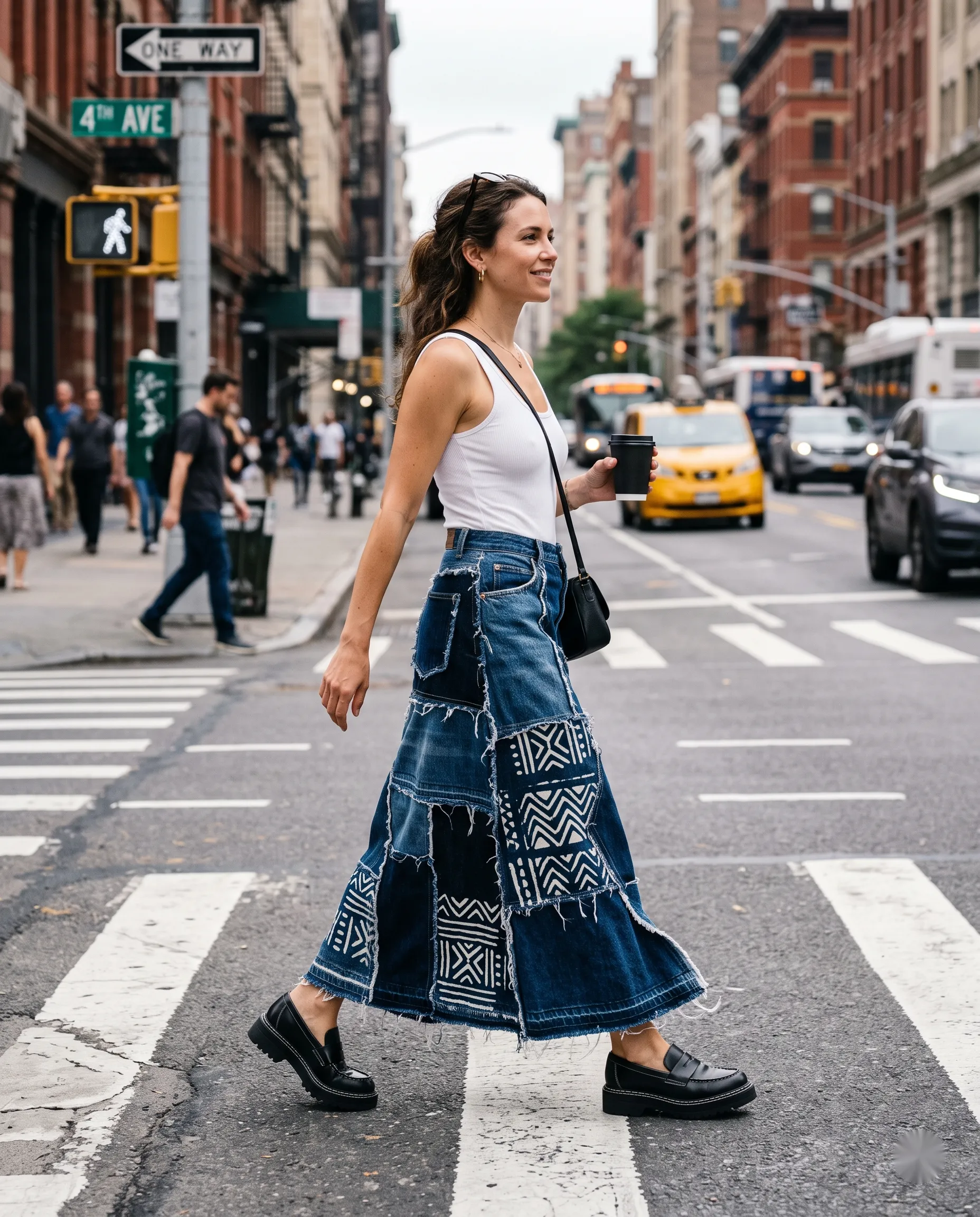
Old jeans don't have to end up in a donation bin. This upcycled maxi skirt proves what a little creativity can do — raw denim panels are stitched together and hand-painted with bleach in bold tribal and geometric patterns. The frayed edges add texture without looking sloppy. Paired with a clean white tank and chunky black loafers, the whole outfit hits that sweet spot between artsy and put-together. A mini crossbody bag keeps things city-ready. This is the kind of altered clothing that turns heads on a busy street crossing — not because it's loud, but because it tells a story. Anyone with thrifted jeans and some bleach can pull this off.
Look 2: Safety Pin Reconstructed Two-Tone Halter Top
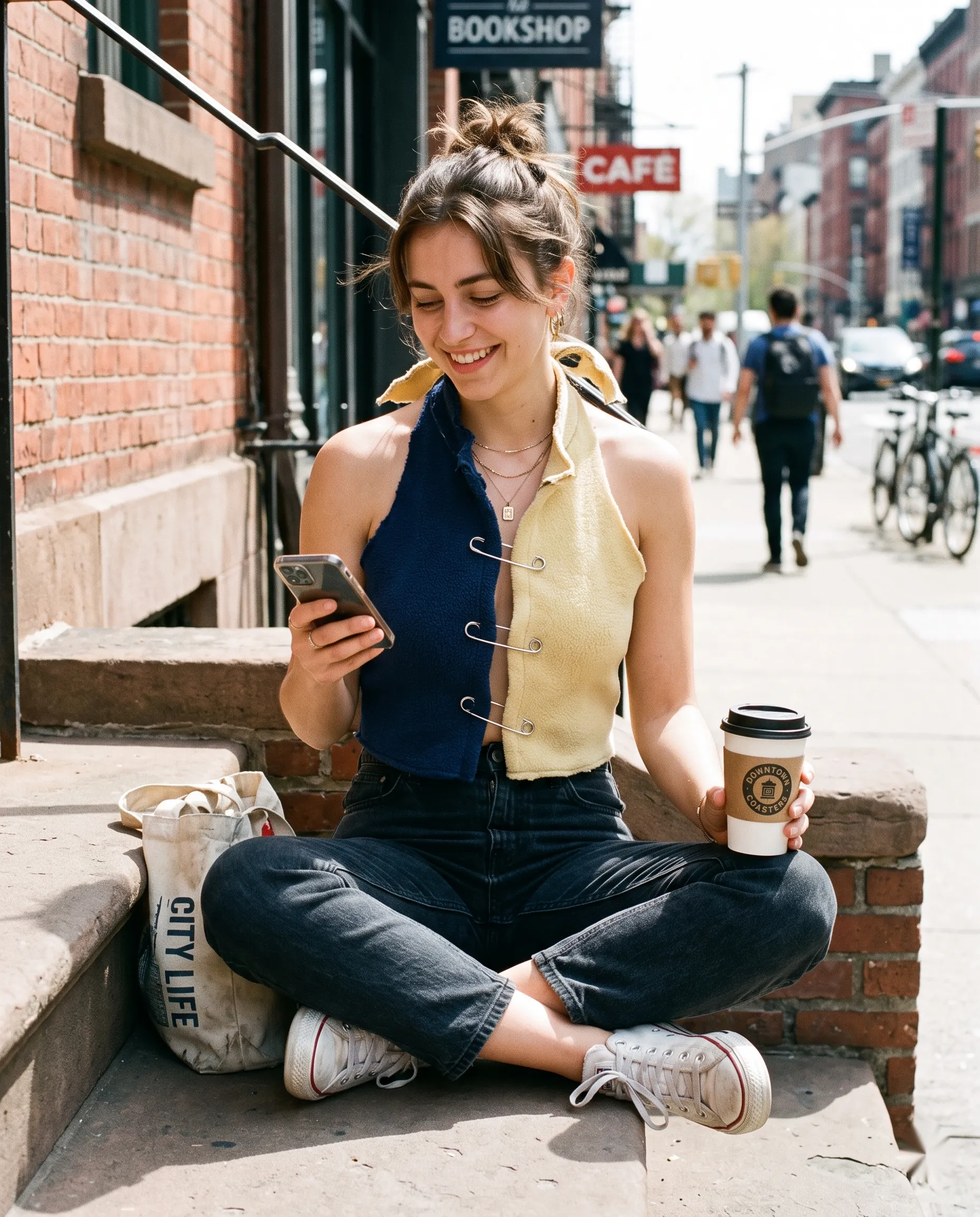
Two old shirts, a handful of safety pins, and some scissors — that's really all this took. One navy fleece and one pale yellow collared shirt got cut down and pinned together into a halter that feels very downtown New York. The safety pins aren't just functional here, they run down the front as a deliberate design detail. Worn with dark straight-leg jeans and beat-up white Converse, this look has that effortless "I made this myself" energy without looking thrown together. A messy bun and layered necklaces seal the vibe. Tote bags and coffee complete the picture. This is altered clothing at its most wearable — no sewing machine needed, just confidence and a good eye.
Look 3: Bleach-Washed Corset Belt Over Flannel Shirt
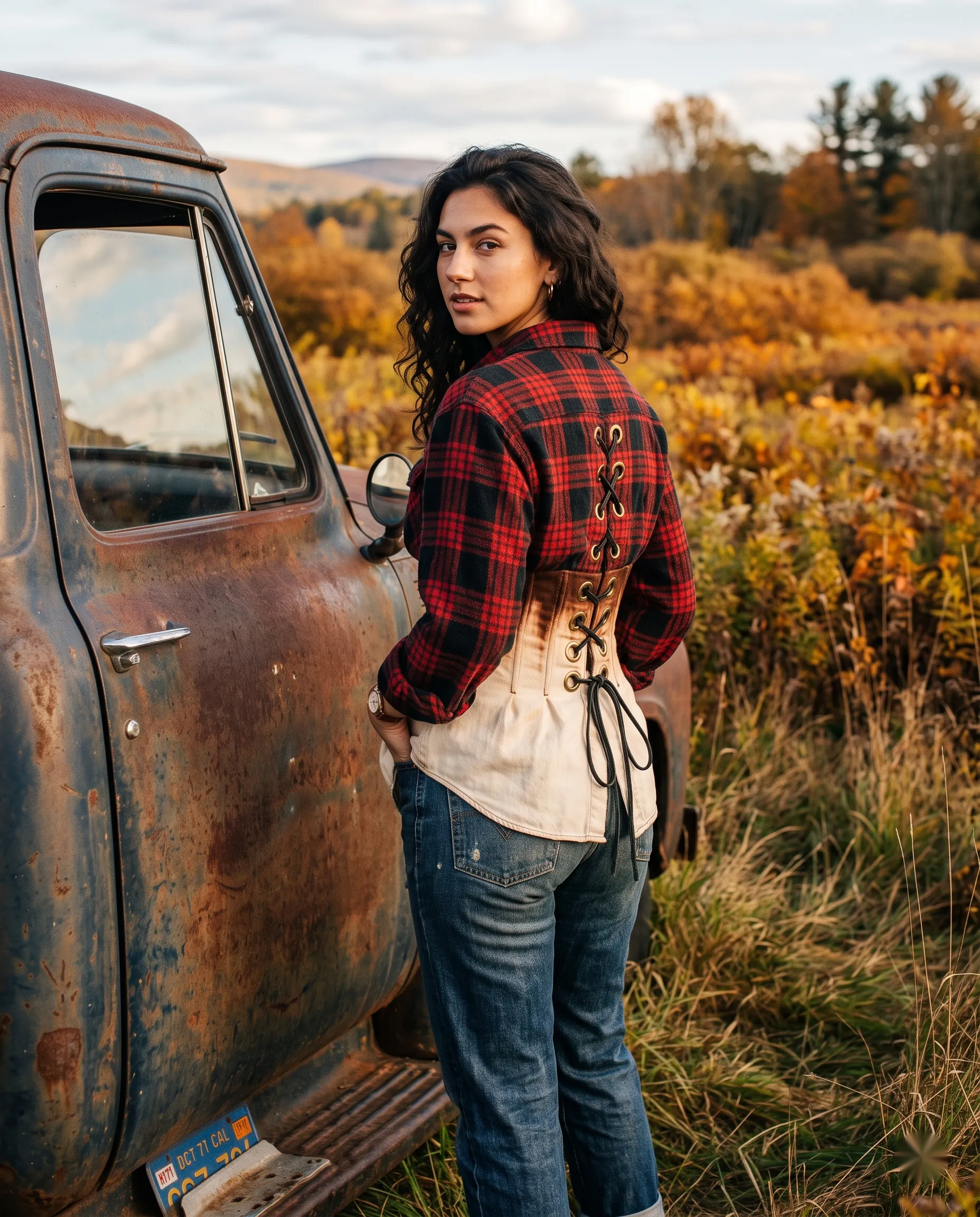
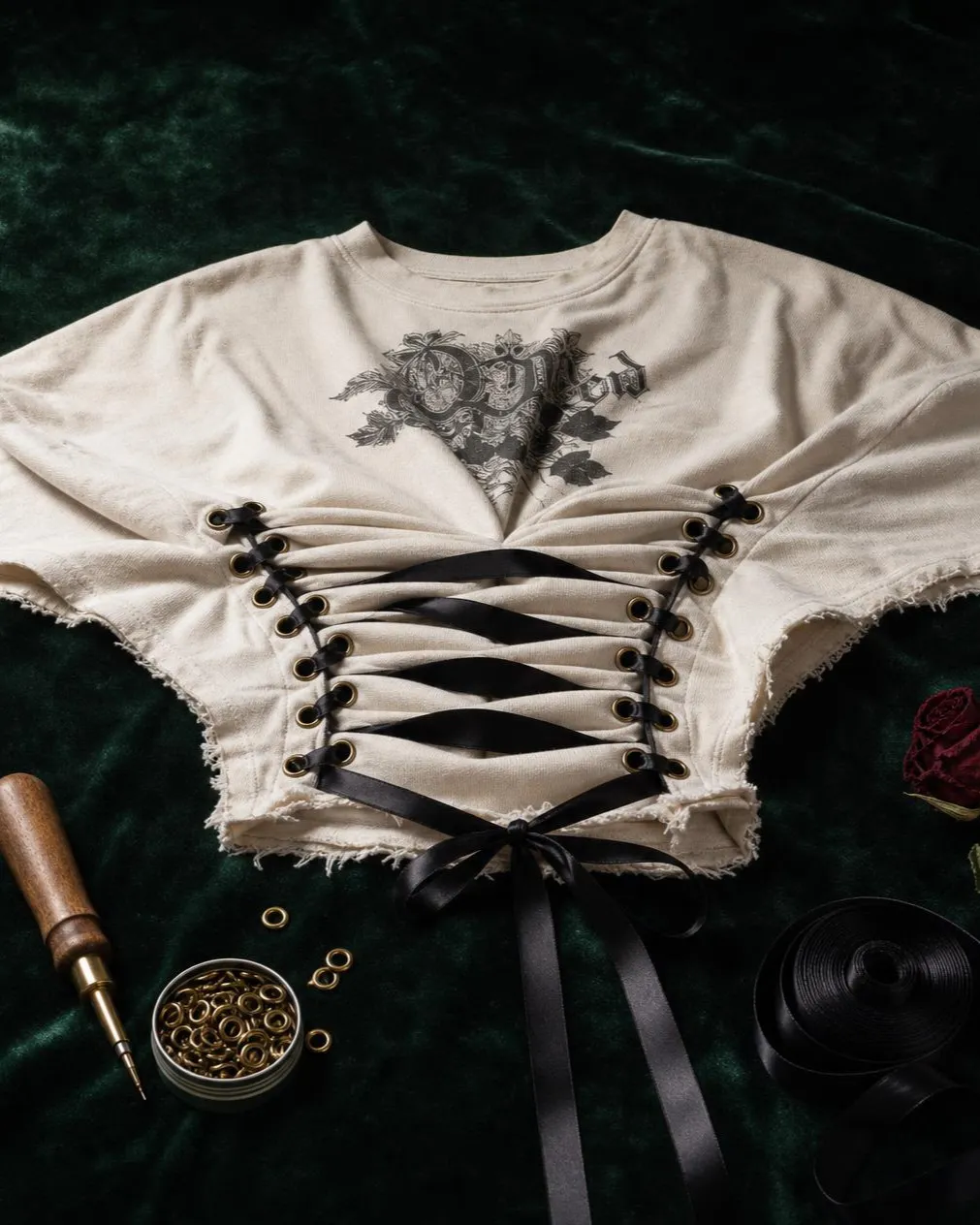
A thrifted flannel shirt gets a serious upgrade here. The trick is layering a bleach-washed corset belt right over it — the cream and golden tones from the bleaching process contrast sharply against that bold red and black plaid. Brass grommets and dark lacing run down the back, pulling everything in and giving the silhouette real structure. Blue straight-leg jeans keep the bottom half grounded. This whole outfit has an autumn countryside energy that feels rustic but thought out. The corset itself looks like it started as a plain canvas piece before bleach did its work. That warm fall backdrop of golden fields makes this combination hit even harder. Two thrift store finds, one strong look.
Look 4: Bleach Botanical Print Cropped Tee

Take a plain dark brown tee and a few real leaves — bleach does the rest. Ferns, wildflowers, and tall grasses are pressed against the fabric and sprayed with diluted bleach, leaving behind these soft, sun-kissed botanical silhouettes. The crop length feels intentional, not accidental. Paired with high-waisted olive cargo pants, the earthy tones work together without looking matchy. This is the kind of bleach shirt idea that actually looks harder to make than it is. Greenhouse light hitting those pale botanical prints makes the whole thing glow. No two shirts ever come out the same, which is exactly the point. Nature does the design work — you just set it up.
Look 5: Acid Bleach Denim Jacket with Safety Pin Spine Detail
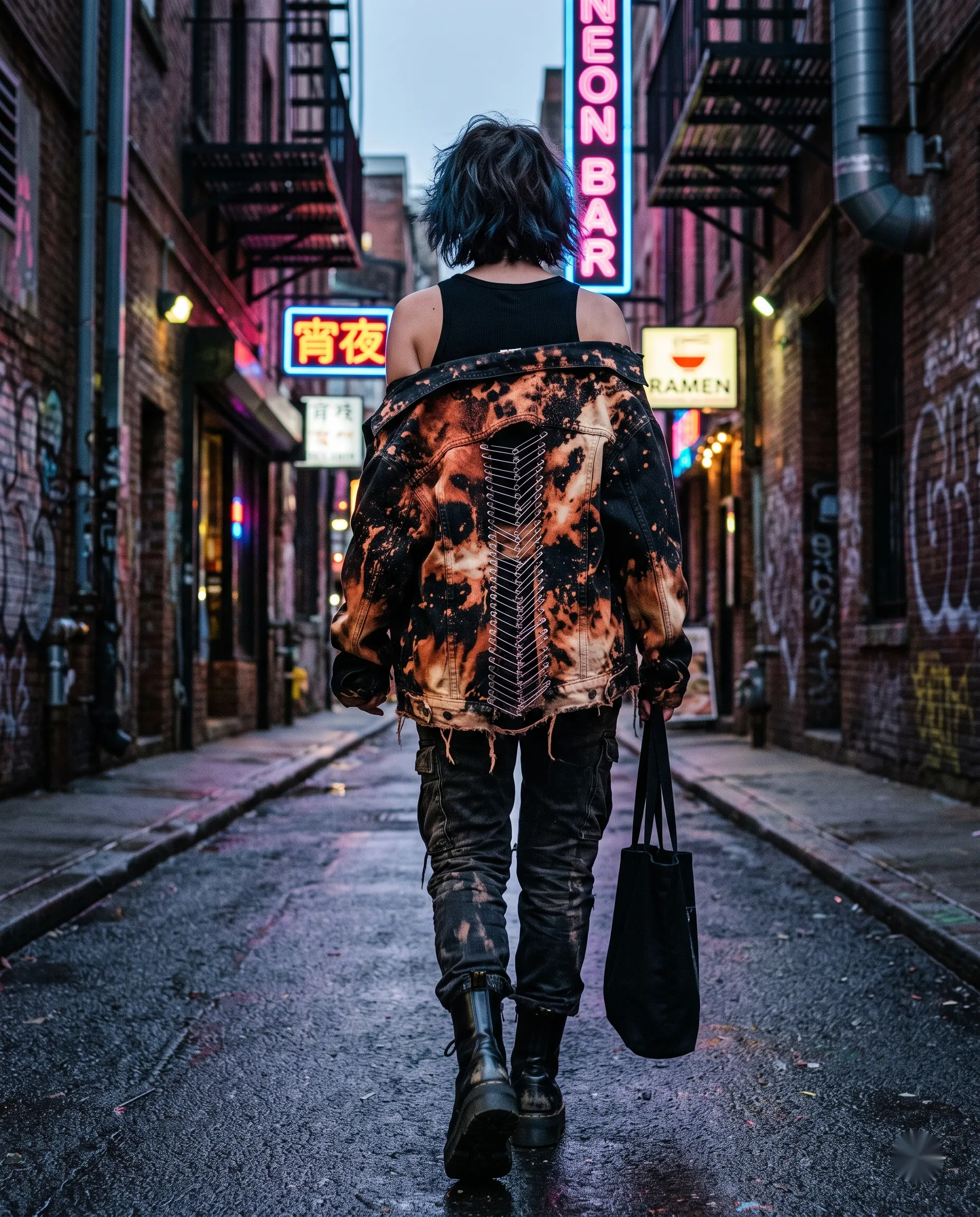
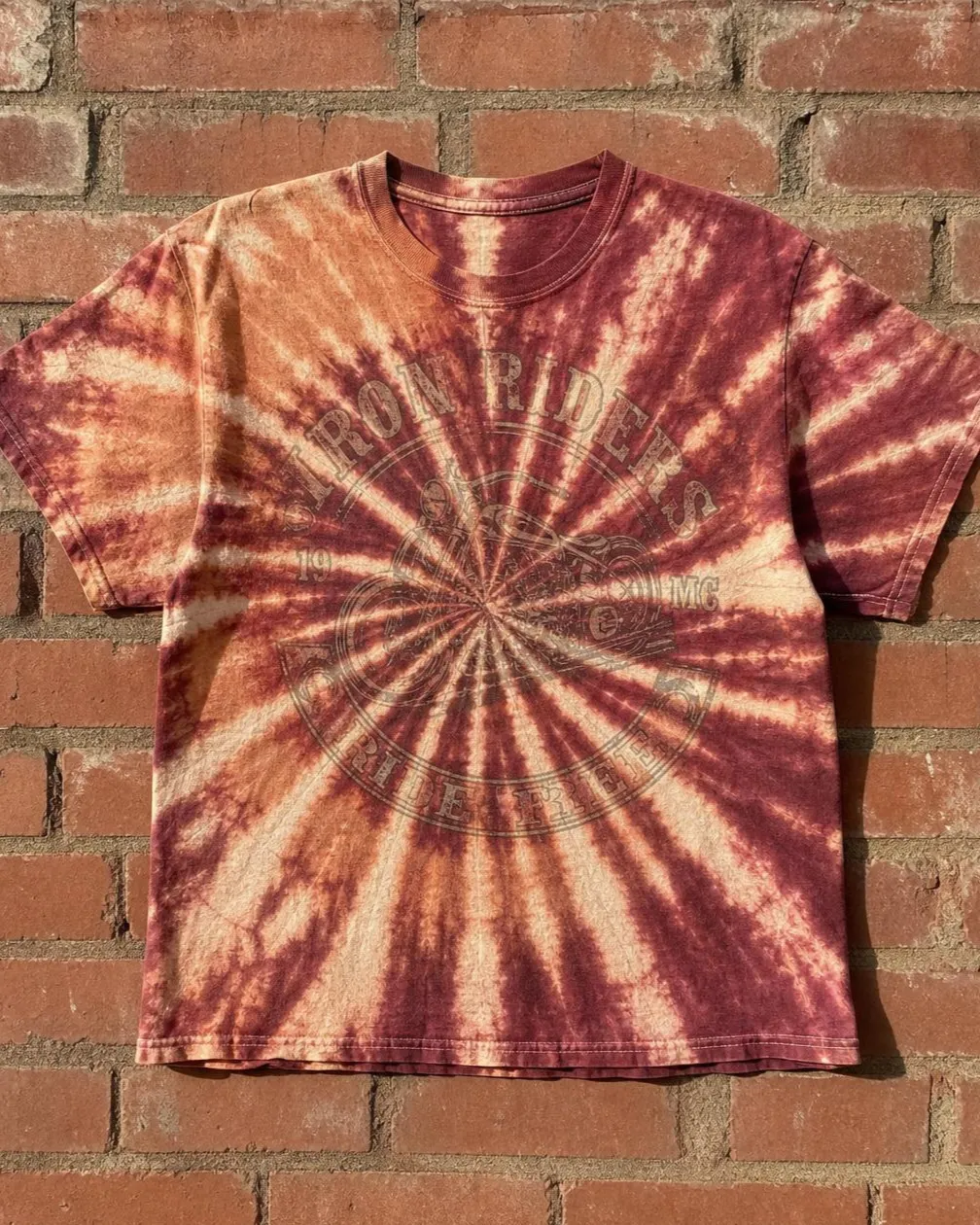
This one means business. A black denim jacket gets completely transformed with acid bleaching — rust, amber, and burnt orange tones spread across the fabric like a storm. Down the center back, a vertical row of safety pins forms a sharp chevron spine that cuts through all that chaos. Worn off one shoulder over a black tank, the attitude is immediate. Distressed cargo pants and chunky combat boots carry the energy downward. Neon signs reflecting off wet pavement in the background could not have been planned better. Everything about this look is deliberate — the destruction, the hardware, the all-black base underneath. Raw, gritty, and completely upcycled from pieces most people would throw away.
Bleaching and Upcycling Tips
Always test bleach on a hidden section of fabric first, since different materials react differently and some synthetic blends won't bleach evenly at all. Dilute bleach with water for more control and gradual, layered effects rather than one harsh application. Work outdoors or in a well-ventilated space, wear gloves, and rinse the fabric thoroughly once you reach the shade you want to stop the chemical reaction. Cotton and denim take bleach best; anything with a high polyester content will resist it. Keep a notebook of your bleach-to-water ratios and exposure times as you experiment, since replicating a favorite result later is much easier with a written record than guesswork.
Upcycling Questions, Answered
Q1: What fabrics work best for bleach projects?
A1: Natural fibers like cotton, denim, and linen absorb bleach evenly and produce the most predictable results. Polyester and other synthetics often resist bleach entirely or discolor unevenly, so check the fabric label before starting.
Q2: Is bleaching clothes at home safe?
A2: It's safe with basic precautions: work in a ventilated area, wear gloves, avoid mixing bleach with other cleaning chemicals, and keep it away from skin and eyes. Diluting the bleach also reduces fumes and gives you more control.
Q3: Can you reverse a bleach project if it goes wrong?
A3: Not fully, but you can often rescue it with dye. Overdyeing a botched bleach job in a darker shade can even out patchy results and give the piece a second life instead of ending up in the donation pile.
Q4: What tools do you need to start bleach-altering clothes at home?
A4: A spray bottle for controlled application, rubber gloves, a well-ventilated outdoor space, and old towels to protect surfaces are the basics. A stencil or leaves can add pattern work once you're comfortable with the base technique.
Starting Your Own Upcycle Project
Every bleach and reconstruction project on this list started as something ordinary sitting in a thrift bin. The results are never fully predictable, and that's part of the appeal. Start small with a test patch, work outdoors, and treat the first attempt as practice rather than a finished piece. The best upcycled pieces usually take more than one try. These techniques also make thrifting more rewarding, since a piece with the wrong color or a small stain becomes raw material instead of a pass. Some of the best upcycled pieces started as items nobody else wanted. Share your results with others working through the same techniques, since seeing how bleach reacts differently across fabrics and dye lots is often the fastest way to improve. Treat every finished piece as a prototype for the next one, since the technique only gets more precise with repetition and a bit of patience.

Sara Khan
Lead Fashion Writer and Style Editor at Outfit Edits, specializing in practical wardrobe curation, seasonal trend breakdowns, and everyday outfit styling. Drawing on years of independent fashion research and garment pairing analysis, Sara tests and reviews outfit combinations around real, versatile wardrobe staples. Her editorial approach is grounded in realistic styling—focusing on proportion, color harmony, and fit—to deliver actionable guidance readers can directly adapt to their personal closets.